
Drywall Repair and Installation in Manchester, NH
Drywall repair in Manchester, NH covers everything from a doorknob hole or a water-stained ceiling to a whole room of new board. It is the job people ask Crimson Maple Construction for most: owner Devin Ouellette lists drywall repair and paint as his most requested work. In the city’s older houses, though, a drywall repair is often a plaster repair in disguise. The right fix depends on which one is actually in your wall.
How a patch gets done, by size
Nail pops and small dents? Compound, a light sand, primer. That's it. A fist-sized hole gets cut square and filled with a new piece of board. That piece is screwed to wood backing, or set in as a paper-faced patch. Anything bigger is cut back to the studs so the new board has something solid to fasten to.
The taping is where patches show or disappear. Tape goes over the seams, then usually three coats of compound, each one feathered out wider than the last. After sanding comes primer. Skip it and the patch soaks up paint differently from the wall around it, and you see a dull square every time the light hits it.
Plaster walls in 1800s and 1900s homes
Devin’s own description of the housing he works in is "There mostly town-houses older 1800-1900s homes." Many of those houses still have plaster over wood lath. Plaster that cracks and sags has usually lost its keys, the bits that squeezed through the lath. They've broken off back there. Loose sections can often be pulled tight again with plaster washers. Then setting compound, then a skim coat.
Sometimes it's too far gone. Then new board is the practical answer. Either way, plaster in a pre-1978 house almost always has lead paint in there somewhere. The EPA’s Renovation, Repair and Painting rule covers anyone paid to disturb that paint in a pre-1978 home. They have to be certified and work lead-safe, and you should get the EPA’s Renovate Right pamphlet before they start. Ask about it. Directly.
New walls and moisture-resistant board
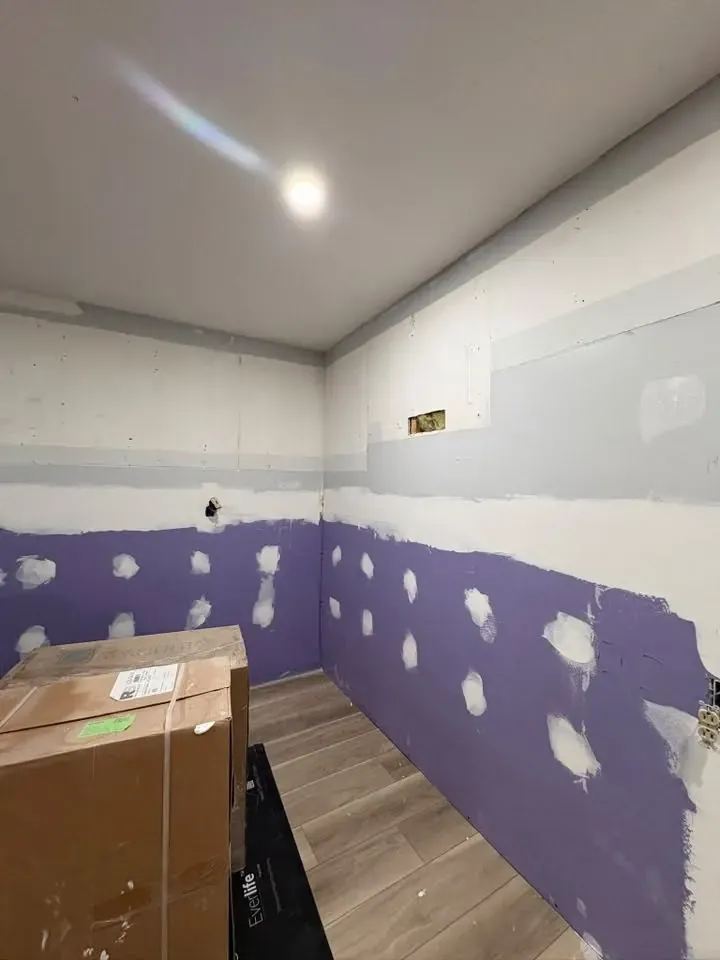
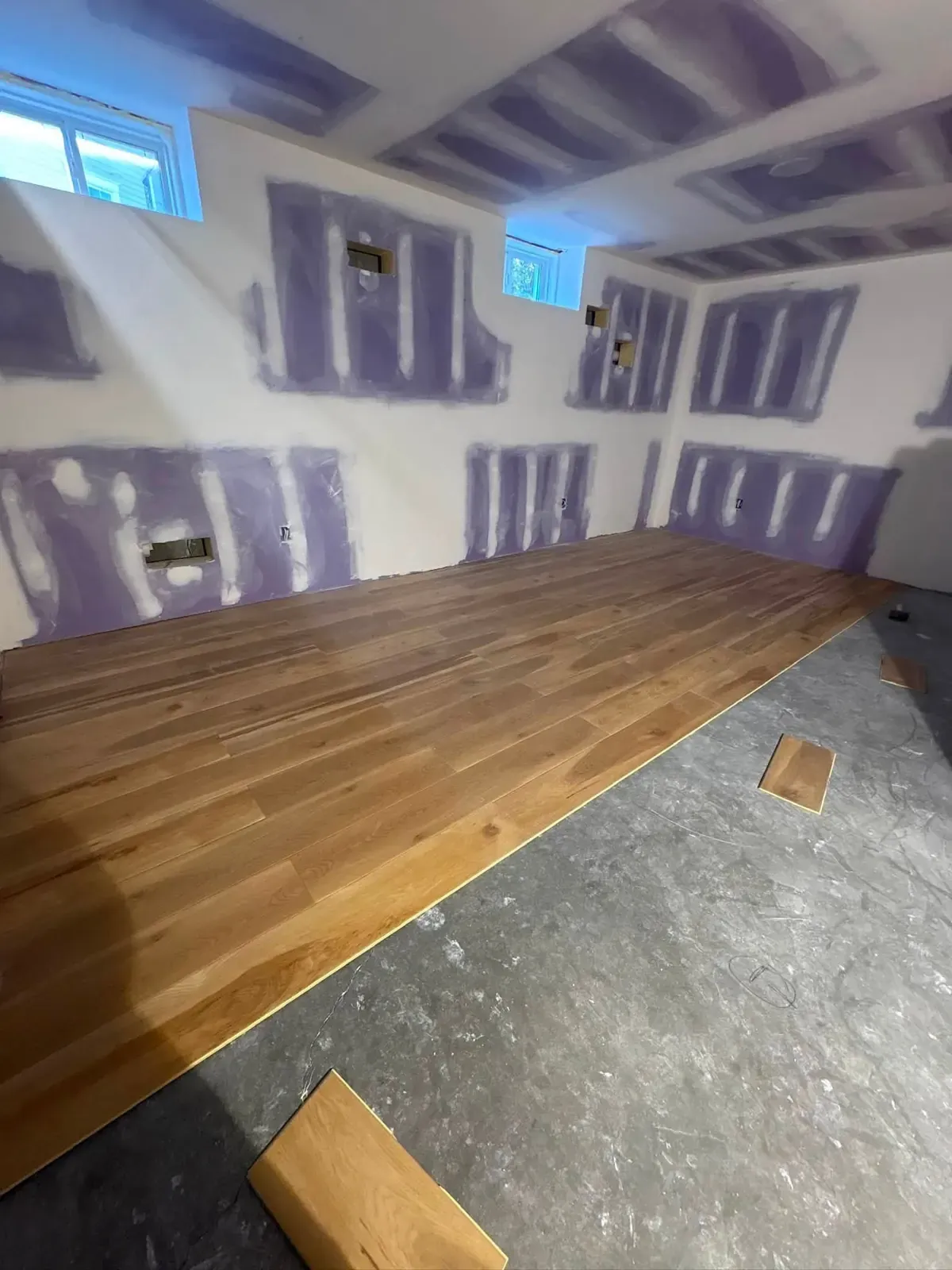
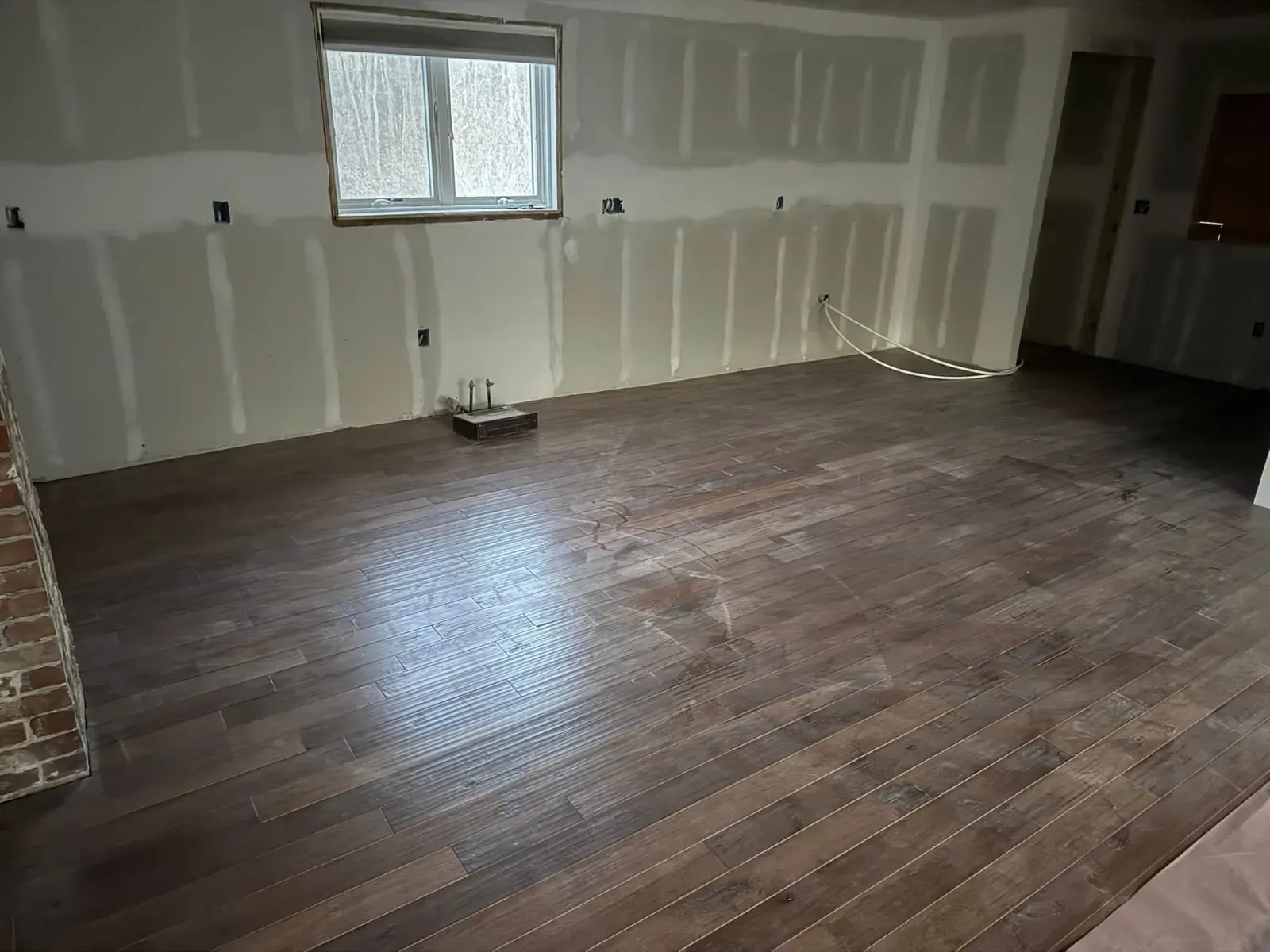
Not every job is a repair. The company’s September 9 reel describes a project where "We framed a new wall, hung and finished the drywall, installed the French double doors, and got everything painted and trimmed out." Its photos show new walls in progress, including purple moisture-resistant board along the lower part of a small room and a basement room with that board on the walls and ceiling, screws already mudded.
That board is a sensible choice in basements and bathrooms, where damp air and the odd spill are part of life in New Hampshire. Adding or moving a wall is also the kind of change that can need a permit. The City of Manchester Building Division handles permit applications, and a call before the job saves a headache later.
The job customers ask for most
When Devin answered the questions for this site, the work he said people ask for most was "Drywall repair and Paint work." His Facebook page backs it up. A September 23 post reads "Got some openings this week for the little jobs that keep getting pushed," and lists "wall patches, paint touch-ups" among them.
So a single hole is not too small to mention. His posts sum up the approach as "Local crew. Clean sites. Straight quotes."
What to send for a quote
"Message us a photo — we’ll get you a number" is how the business puts it. Send a close-up of the damage with something in the frame for scale (a tape measure, a hand). Then one wide shot of the whole wall or ceiling. Water stain? Say whether the leak's been fixed.
And roughly when the house went up. That tells whoever quotes the job whether they are looking at drywall or plaster, and whether lead rules apply. The business’s August 3 reel ends with "Reach out today for a free estimate."
Questions people actually ask
- How can I tell if my walls are drywall or plaster?
Push a thumbtack into the wall somewhere out of sight. Drywall takes it with light pressure. Plaster barely dents. Knock, too: plaster feels colder and sounds solid, drywall sounds hollow between the studs. Pre-1950s house? Probably plaster, unless someone's renovated. Many older houses have both, room by room.
- Why does my patch still show through the paint?
Two usual reasons. Either the compound wasn’t feathered wide enough, so there is a slight hump you can see in low light, or the patch wasn’t primed and the paint dried to a different sheen over it. Both are fixable. Another thin skim coat, a light sand and a coat of primer before the finish paint normally makes it disappear.
- Should I fix a ceiling stain before or after the leak?
After. A stain is a symptom, and painting over it while water is still getting in just gives you a new stain on fresh paint. Find and stop the leak first. Then let the ceiling dry out fully, cut out any board that has gone soft, and seal the stain with a stain-blocking primer before painting.
- Will a small drywall job get looked at?
Crimson Maple Construction’s Facebook page specifically invites "the little jobs that keep getting pushed," naming wall patches and paint touch-ups. To ask about availability, call (603) 722-3344 or send damage photos on Facebook. Got a few small things around the house? Put them all in one message. A short punch list is easier to quote than one repair at a time.
Related work
- PaintingInterior and exterior painting in Manchester, NH: prep, patching, priming and finish coats for older homes, with lead-safe rules for pre-1978 houses.
- Trim carpentryTrim carpentry and wainscoting in Manchester, NH: baseboard, casing, crown and board-and-batten, fitted to the uneven walls of older homes.
- FramingFraming in Manchester, NH: new walls, wider openings, basement rooms and new builds, and the NH building code behind them. Foundations and concrete by others.
Manchester, NH
Tell us what the house needs
Call and describe the job. If it is on the service list, ask how it would go. Foundation work and concrete pads are not on it.