
Tile Installation in Manchester, NH
Tile installation in Manchester, NH is mostly bathroom work. Floors, tub surrounds, the wet walls around them. Often the house is old enough that nothing's quite square. Crimson Maple Construction sets tile in Manchester and nearby towns, and owner Devin Ouellette names flooring and tile as his most profitable work. Tile is heavy and rigid, and it shows every flaw in whatever it is stuck to. That is why most of a good tile job happens before the first tile is set.
What the company’s own tile photos show
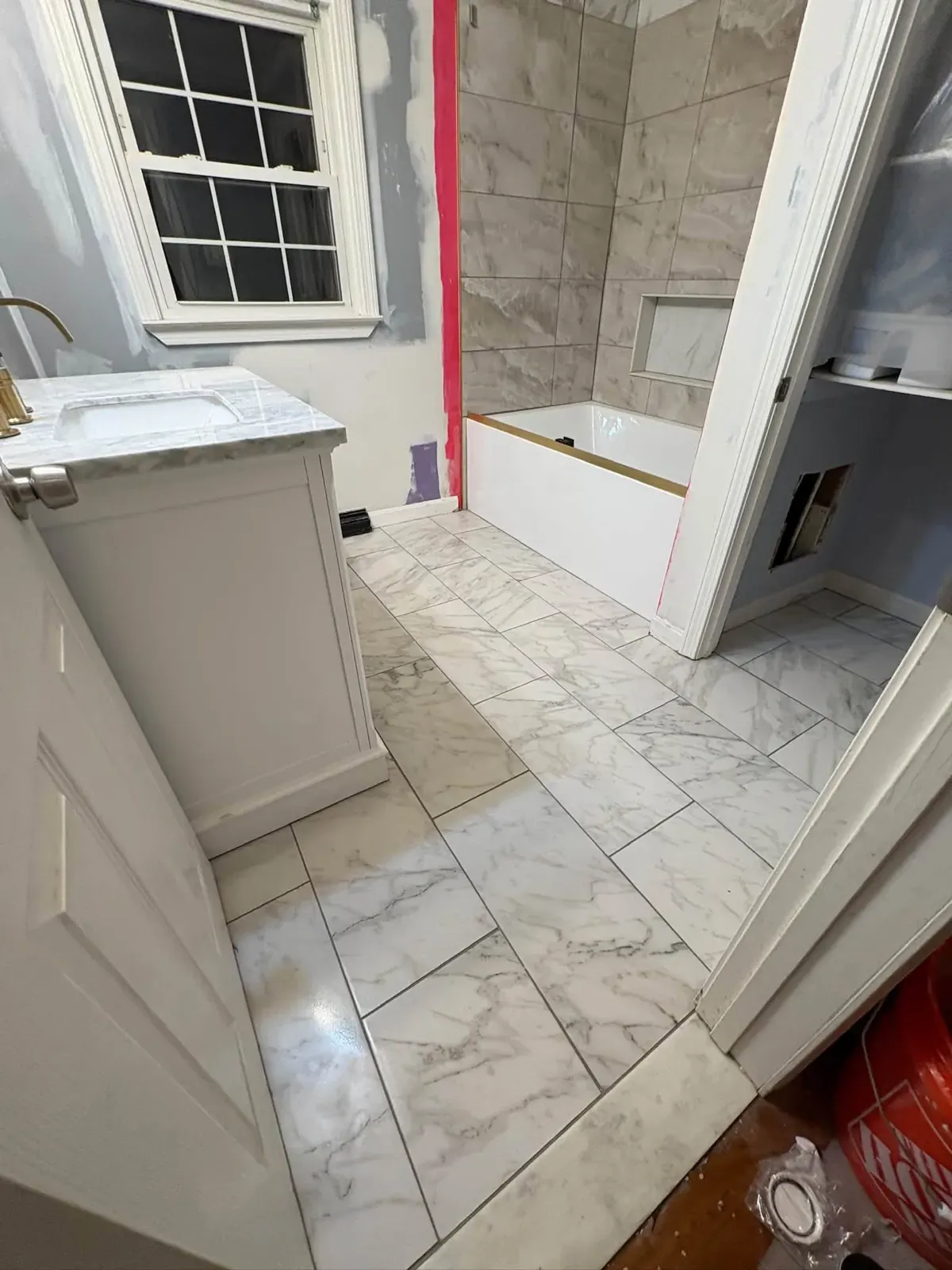
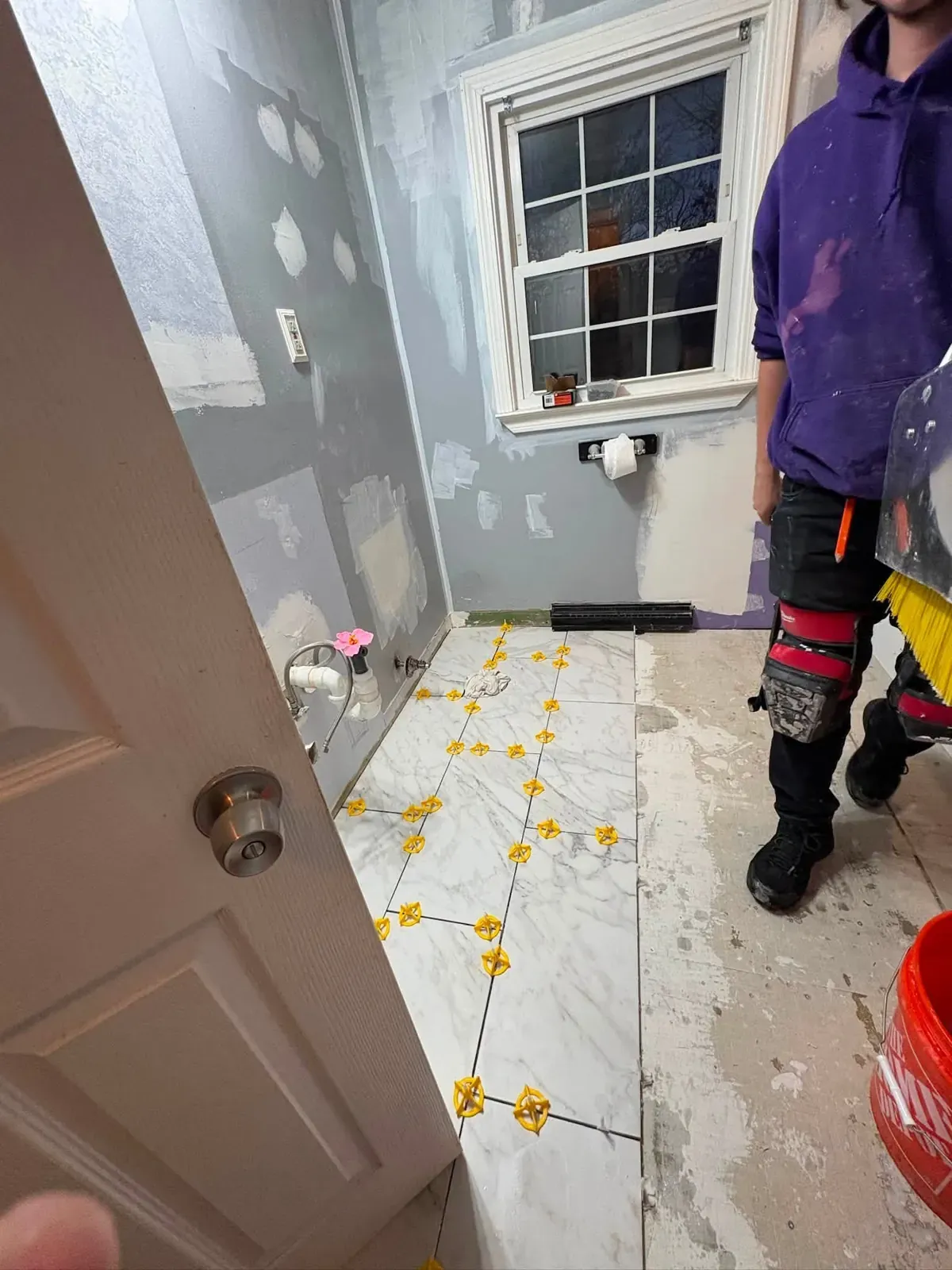
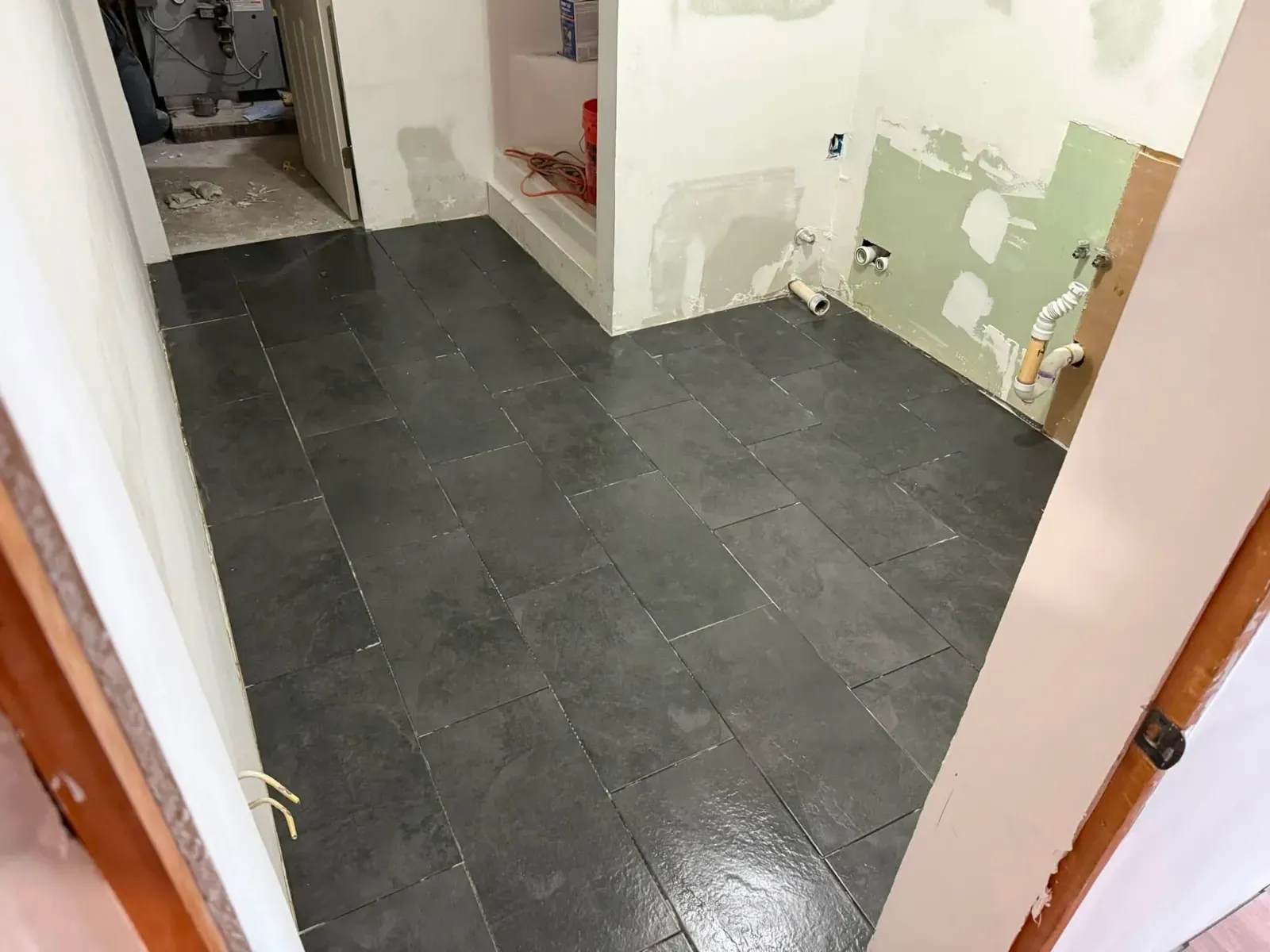
Here are three of the tile photos on the business’s Facebook page. One is a bathroom with a large marble-look floor and a grey tile tub surround going in beside a white vanity. Another shows marble-look tile being laid, with yellow leveling clips at every joint. The third is a dark slate-look floor in a small room whose walls have been stripped and patched.
Those clips are worth a word. Big tiles are rarely dead flat. Most come out of the kiln with a slight bow. The clips pin neighboring edges level while the thinset cures; otherwise one corner ends up proud of the next. Tile setters call that lip lippage. Your toe will call it something else.
Tile needs a stiff, flat floor under it
Vinyl plank will ride over a little bounce. Tile won’t. When a floor flexes, grout cracks first and then tiles crack or come loose. In older Manchester houses, bathroom joists have often been notched or cut for a century of plumbing changes. A good installer looks at the framing first. Then promises a tile floor.
Over a wood subfloor, tile normally sits on cement backer board or an uncoupling membrane. Not bare plywood. Large-format tile wants a flatter base than small tile, and full thinset coverage. In practice that means combing the floor and back-buttering every tile too. Hollow spots under a big tile are where cracks start.
Tub surrounds and wet walls
Behind the tile around a tub or shower, the backer matters more than the tile does. The International Residential Code, which New Hampshire adopts, calls for cement, fiber-cement or glass-mat gypsum backers in tub and shower areas. Plain paper-faced drywall doesn’t belong there. Most installers also add a waterproofing layer, because grout is not waterproof and never was.
Tearing out an old surround can surprise you. Plaster walls, soft framing or an old leak are common finds in houses from the 1800s and 1900s. If the house was built before 1978, any work that disturbs the painted walls around the tub falls under the EPA’s lead renovation rules, so ask how dust will be contained. A working bathroom fan matters too; tile lasts longer in a room that dries out.
Tile is on Devin’s short list
In his answers for this site, Devin named "Flooring and Tile" as his most profitable work. His September 19 Facebook post lists it first: "Tile, flooring, demo, interior & exterior paint, siding, windows, doors, trim, and roofing — residential work done right the first time."
This page covers the tile itself: floors, surrounds and the base under them. If your bathroom needs more than tile, describe the whole job when you get in touch and ask Devin which parts he takes on.
Getting a number on a tile job
The business puts it plainly: "Message us a photo — we’ll get you a number." For tile, send a photo of the floor, one of each wet wall, and a close-up of any cracked grout or loose tile. Say whether the tub or vanity is staying, and give rough room sizes.
One of the company’s reels ends with "Reach out today for a free estimate." Know the tile already? Include the size. A 24-inch tile and a 3-inch mosaic aren't remotely the same job.
Questions people actually ask
- Can new tile go over my old tile?
It is possible when the old tile is flat, fully bonded and on a stiff floor, but it is rarely the better choice in an old house. You can’t see what is under the old tile, the floor gets higher at the door, and any movement underneath carries straight through to the new tile. In a wet area, tearing out to the backer is the safer call. Either way, have the installer tap for hollow-sounding tiles first.
- Why does grout keep cracking along the same line?
When a crack keeps coming back along one line, the floor's usually moving right there. Maybe a joist flexes. Maybe it's a subfloor seam, or the spot under the tile where two different materials meet. Regrouting treats the symptom. The fix is stiffening or separating whatever is moving, and sometimes that means lifting the tile to get at it.
- How long before a newly tiled shower can be used?
It depends on the setting materials. Thinset generally has to cure before grout goes in. Then grout and any waterproofing layer need their own cure before they get wet. The product labels give the numbers, and cold or damp weather slows things down. Ask whoever sets the tile for the dates on your job, not a general rule.
- Does Crimson Maple Construction tile outside Manchester?
The Facebook page says the business operates out of Manchester and the surrounding areas, and Devin’s own words on range are "I would service anywhere from southern Maine to Massachusetts." For your address and timing, call (603) 722-3344, or message photos of the space. Mention the town and the rough room size. That way the answer fits your job.
Related work
- FlooringFlooring installation in Manchester, NH: luxury vinyl plank, laminate and engineered floors, subfloor repair and stair treads in older homes.
- Drywall repairDrywall repair and installation in Manchester, NH: holes, cracks, water stains, old plaster walls and new board, taped and ready for paint.
- PaintingInterior and exterior painting in Manchester, NH: prep, patching, priming and finish coats for older homes, with lead-safe rules for pre-1978 houses.
Manchester, NH
Tell us what the house needs
Call and describe the job. If it is on the service list, ask how it would go. Foundation work and concrete pads are not on it.