
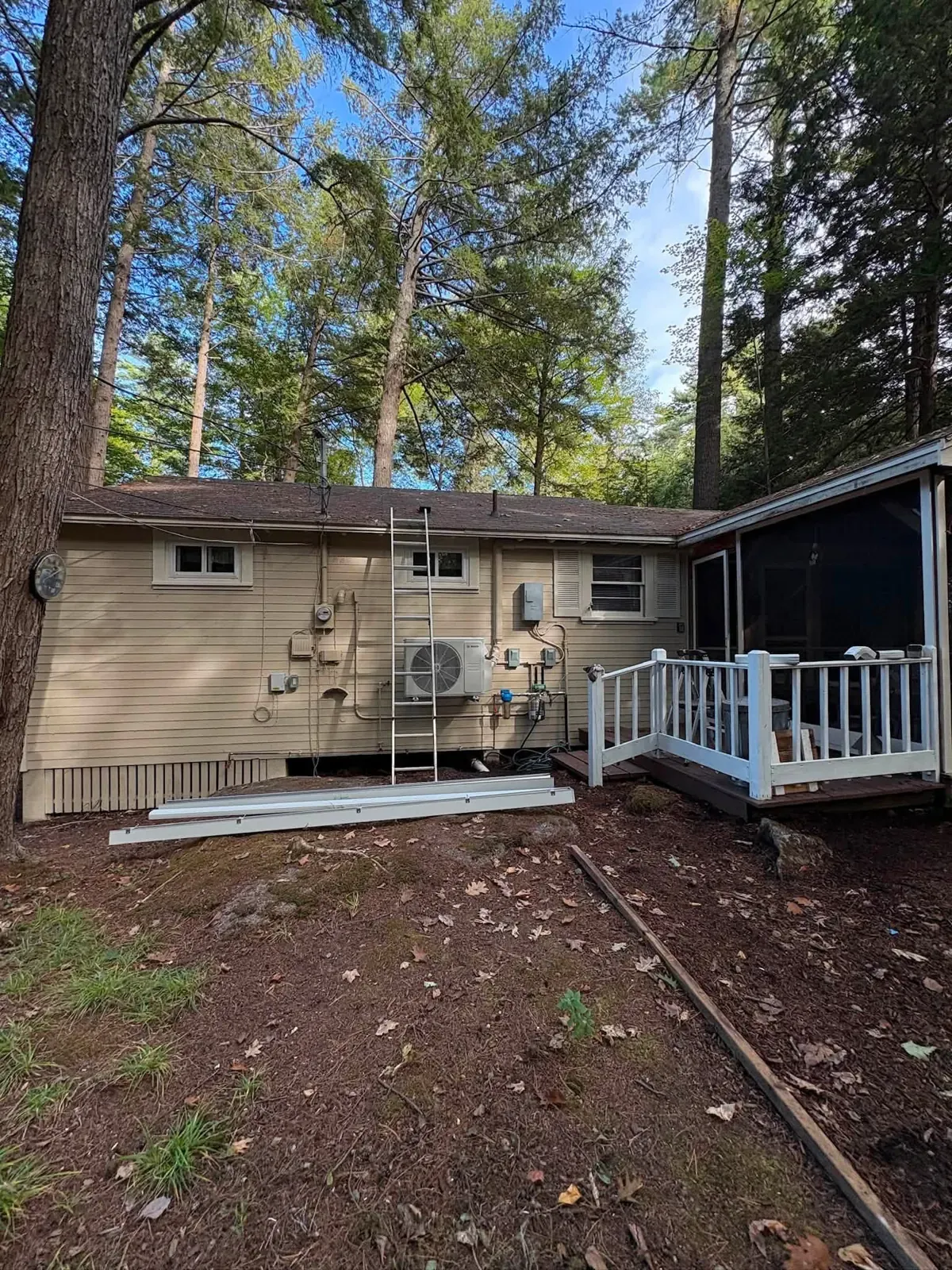
Roof Snow Removal in Manchester, NH
Roof snow removal in Manchester, NH does two jobs: it takes weight off a roof before that weight becomes a structural problem, and it clears the eaves so ice dams have less to work with. Crimson Maple Construction lists "Winter-time Roof snow removal" among its services, in the owner's own words. Most southern New Hampshire roofs carry a normal winter without any help. Trouble comes after a big storm, rain falling on an existing snowpack, or a run of storms with no thaw between them, and it comes first to roofs that are old, low-slope or already sagging.
When snow on a roof becomes a problem
Fresh powder is light. Wet, packed snow weighs far more at the same depth, and ice more again. Rain on an existing snowpack soaks in and adds weight without adding height, which is why roofs sometimes give out on a mild, rainy day after the storm rather than during it.
Roofs are designed for a snow load set by the building code for their location. New Hampshire's state building code adopts the International Residential Code, which ties roof design to ground snow loads that vary across the state. A roof built to code has margin for a normal winter. Older roofs may not. Cut into one, add onto it, let its rafters rot, and it may have less than it started with.
Devin's own description of most houses he works in: older town-houses, 1800s and 1900s. Those tend to have low-slope porch roofs, dormers, additions. Snow drifts into those spots and stays.
Warning signs inside the house
An interior door that suddenly sticks or won't latch, upstairs especially. Fresh cracks in drywall or plaster, often angling off the corners of doors and windows. Creaking or popping up in the attic. A ceiling that looks like it's dipping. Water stains appearing in the middle of winter.
Any of those after a heavy storm is a reason to get snow off the roof. A sagging ceiling is a reason to get everyone out of that room first. If a roof is visibly bending, nobody should go up on it. Get out and call 911.
Roof rakes, shovels and the shingles underneath
For a one-story roof, or the lower edge of a taller one, a roof rake used from the ground is the safest tool going. It pulls snow off the eaves without anyone on a ladder. Clearing the first few feet above the eave matters most, since that's where ice dams start.
Going up on the roof is a different job. It's slippery, snow hides skylights, vents and the roof edge, and a slide off a two-story eave can kill. Whoever goes up needs fall protection, and should know where they'll stand before they climb.
Don't scrape to bare roof. Leave a thin layer on the shingles. A metal shovel or hard raking strips granules off asphalt shingles. Cold tabs are brittle and crack. Sometimes an edge catches and lifts. Keep metal rakes well clear of the power line coming into the house.
Where the snow lands
Snow pulled off a roof piles up fast. Keep it off doors and walkways and the gas meter. Watch the sidewall vents too: furnace, water heater, dryer. Bury a high-efficiency furnace vent and the furnace may shut down. Or exhaust gets pushed back toward the house.
Before winter hides them, know where the basement windows are. The shrubs. The outdoor AC unit. A slab of snow sliding off a steep or metal roof can flatten any of them.
Why it is on the list, and what to send
"Winter-time Roof snow removal" and "Ice-dam clearing" both sit on the service list Devin gave, next to roofing. That fits a general contractor who calls himself able to do "anything from frame to finish". The trade that builds and shingles roofs knows what's under the snow, and can flag damage that needs a repair once it's clear.
The business's own line is "Message us a photo — we’ll get you a number." Send a ground-level photo of the roof and one of the eaves. Inside, shoot any cracks or doors that stick. How many stories? Is any of the roof low-slope? Say so. Storm-day availability hasn't been published. Call (603) 722-3344 and ask Devin.
Questions people actually ask
- How much snow is too much for my roof?
No single number. It comes down to how the roof was built, how old and how sound it is, and how heavy the snow is. Two feet of dry powder? Far lighter than a foot of wet, packed snow, or a crust of ice. If you see warning signs inside, like sticking doors or new cracks over doorways, don't wait for a measurement. Get the load off.
- Can I rake my own roof?
From the ground, with a roof rake, on a one-story roof, plenty of homeowners do. Keep well away from power lines. Stand back from where the snow comes down. And don't rake to bare shingles. No climbing onto a snowy roof, and no ladder work in snow and ice. That's how people get badly hurt every winter.
- Will removing the snow damage my shingles?
It can, done carelessly. Metal shovels, ice chisels and scraping down to the shingle surface strip granules and crack shingles that are brittle from the cold. Leaving a thin layer of snow behind protects the roof. Ask whoever you hire what tools they use and whether they leave a layer on, before they start.
- Can I book roof snow removal for the whole season?
Roof snow removal is on the owner's service list, but how it's booked, whether seasonal, storm by storm or both, hasn't been published, so this page doesn't claim either. Ask Devin when you call how he schedules roof snow work. It helps to call before the first big storm rather than in the middle of one, when every roof in town needs clearing at once.
Where to check this yourself
Related work
- Ice dam removalIce dam removal in Manchester, NH: why dams form at the eaves, steam vs chipping, what to ask whoever clears them, and the attic fix that stops them returning.
- RoofingRoofing in Manchester, NH: shingle repair or replacement, tear-off vs overlay, ice barrier at the eaves, flashing and ventilation, and what to send for a quote.
- Emergency repairsEmergency home repairs in Manchester, NH: water-damaged subfloor and drywall, storm damage to siding and roofs, doors that won’t lock. What to do first.
Manchester, NH
Tell us what the house needs
Call and describe the job. If it is on the service list, ask how it would go. Foundation work and concrete pads are not on it.