
Emergency Home Repairs in Manchester, NH
Emergency home repairs in Manchester, NH are the jobs that can't wait for the next open slot: a leak that has soaked the subfloor, a storm that tore siding or shingles loose, a back door that won't lock after a break-in. "Emergency Repair" is on the service list Devin Ouellette gave for Crimson Maple Construction. This page covers what a general contractor handles once the first crisis is under control, what has to happen before that, and what to send. It doesn't promise a response time. Call (603) 722-3344 and ask what's possible that day.
First, make it safe
A general contractor usually isn't the first call. Water still running? Shut off the main. Call a plumber. If it's reached outlets, fixtures or the panel, kill the power at the breaker, but only if you can get there without standing in water. Then call an electrician. If you smell gas, get out and call the gas utility from outside.
Those trades stop the damage. The carpenter comes in after, to fix what the damage left behind.
Before anything gets torn out, take pictures. The wet areas, the source, the damaged belongings. An adjuster will ask for those first. Once cleanup starts, they're gone.
Water damage: subfloor and drywall
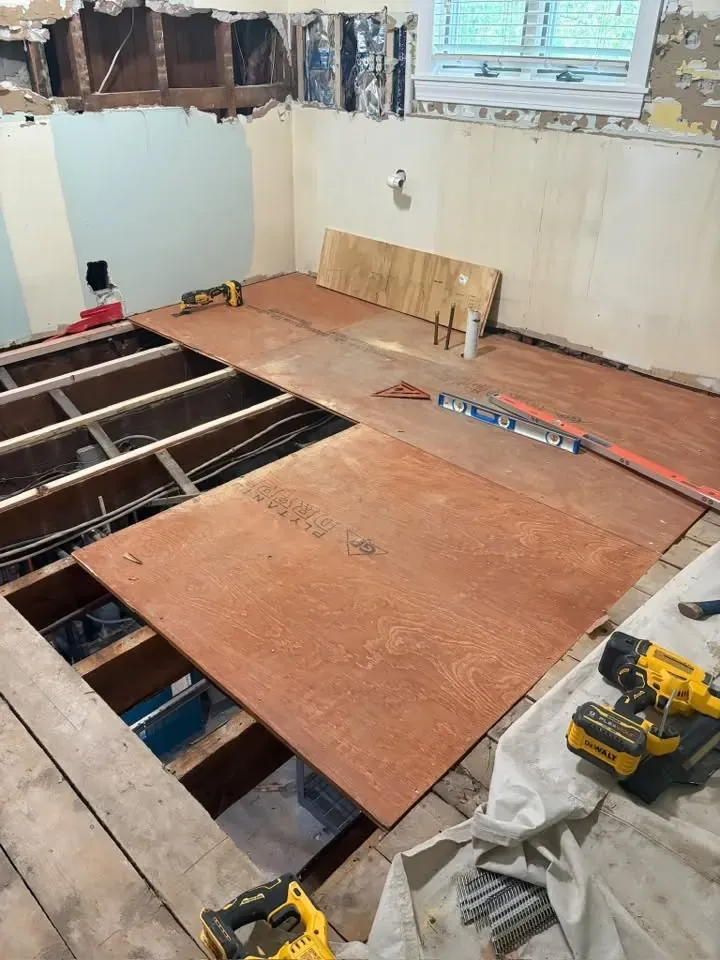
Water that sits in a floor soaks into the subfloor. Particleboard swells. Old plank subfloor can too, and both lose strength. The damaged sheets get cut out back to the joists. The framing dries. Then new subfloor goes down. One of the owner's photos shows that stage: a floor opened down to the joists, new plywood sheets going down, a cordless drill resting on the boards.
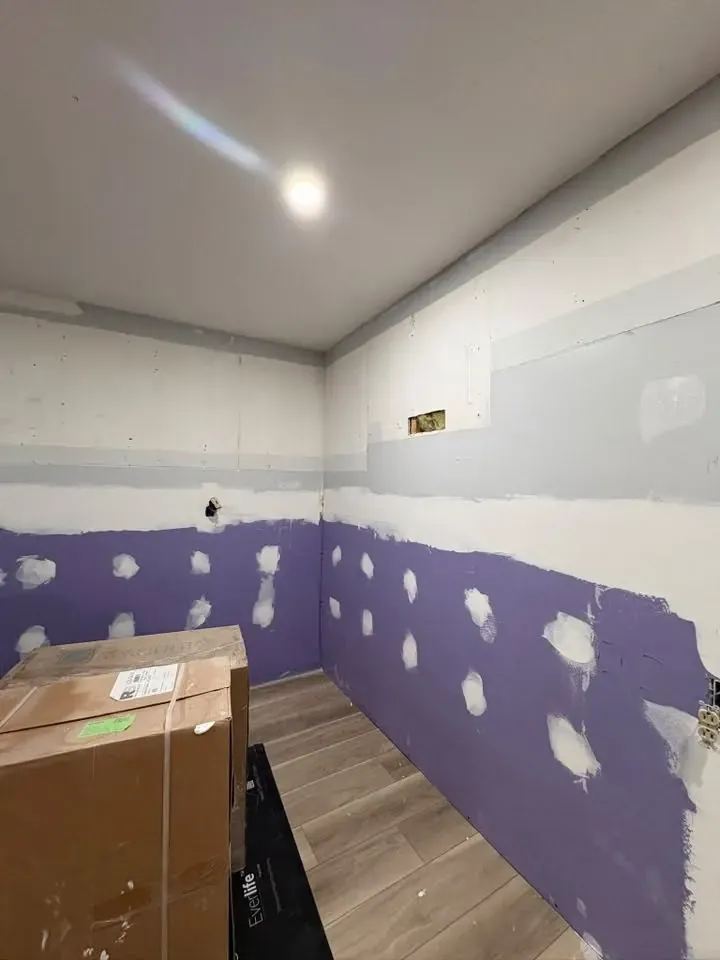
Wet drywall usually gets cut out a foot or two above the water line so the wall cavity can dry and the soaked insulation can come out. Closing damp material back up inside a wall is how a leak turns into a mold problem.
In a pre-1978 house, cutting out painted plaster or drywall disturbs old paint that may contain lead. EPA's RRP rule makes a narrow allowance for true emergencies. The lead-safe cleanup still applies once the urgent part's over. What that looks like from your side is in EPA's Renovate Right pamphlet.
Storm damage to siding and roofs
Wind lifts shingles. It unlocks vinyl panels. A falling limb goes through both. The first job is getting the house dried in: a tarp over the roof opening, or sheathing and wrap patched over a hole in a wall. The permanent fix comes after the weather clears and the insurer has seen the damage.
A tarp nailed through its middle just leaks through the nail holes. It has to run up over the ridge and be battened down at the edges. Please stay off a wet or icy roof. That's a job for someone with fall protection.
Structural damage, like a cracked rafter or a wall pushed out of plumb, is a different class of repair. Check with the City of Manchester Building Division about a permit and inspection before it gets closed back up.
Doors that won't lock
After a forced entry the damage is usually in the jamb, not the lock. The strike side splits along the grain, and a new deadbolt in split wood holds nothing. A stopgap is screwing the door shut from inside, or bracing it, until the jamb can be fixed.
The proper repair is a new jamb section or a new pre-hung door, with the strike plate fastened by long screws into the framing behind it. Doors are on Crimson Maple's regular service list, so this is the same work done with more urgency.
Why it is on the list, and what to send
Devin's own line is "I’m a General contractor that can do anything from frame to finish." After damage, that range matters. One leak can mean subfloor, drywall, trim, paint and flooring in the same room, and all five are on his service list.
The business's line is "Message us a photo — we’ll get you a number." On an urgent job, send damage photos, a wide shot of the room or wall, and a line about what happened and when. Then pick up the phone: (603) 722-3344. Availability changes day to day. Ask Devin.
Questions people actually ask
- Can someone come out tonight?
The business hasn't published hours or a response time, so this page won't promise one. Call (603) 722-3344; ask Devin. Water still running, gas, anything electrical? Plumber, electrician or utility first. Those need to be stopped before any carpentry repair can start, whoever does it.
- Will insurance cover the repair?
That depends on your policy and what caused the damage. Most homeowner policies don't treat a burst pipe the way they treat a slow leak that dripped for months. Call your insurer early. Photograph before cleanup. Anything you spend limiting the damage, keep the receipt. Ask Devin when you call whether he works with adjusters directly.
- How fast does wet drywall need to come out?
Soon. Mold can start on wet drywall and wood within a day or two, especially in a warm house, so the sooner wet material is out and the cavity is drying, the better. Fans and a dehumidifier help a lot. If the water came from a sewer backup or outside flooding, treat everything it touched as contaminated and don't try to save it.
- Can I just patch the soft spot in the floor?
A small, solid, dry area can sometimes be patched between joists with proper blocking underneath. Swollen, soft or delaminated subfloor needs to come out back to sound material. Patching over it leaves a soft spot that telegraphs through whatever goes on top, and it will crack tile or open up the joints in plank flooring later.
Related work
- Drywall repairDrywall repair and installation in Manchester, NH: holes, cracks, water stains, old plaster walls and new board, taped and ready for paint.
- FlooringFlooring installation in Manchester, NH: luxury vinyl plank, laminate and engineered floors, subfloor repair and stair treads in older homes.
- RoofingRoofing in Manchester, NH: shingle repair or replacement, tear-off vs overlay, ice barrier at the eaves, flashing and ventilation, and what to send for a quote.
Manchester, NH
Tell us what the house needs
Call and describe the job. If it is on the service list, ask how it would go. Foundation work and concrete pads are not on it.