
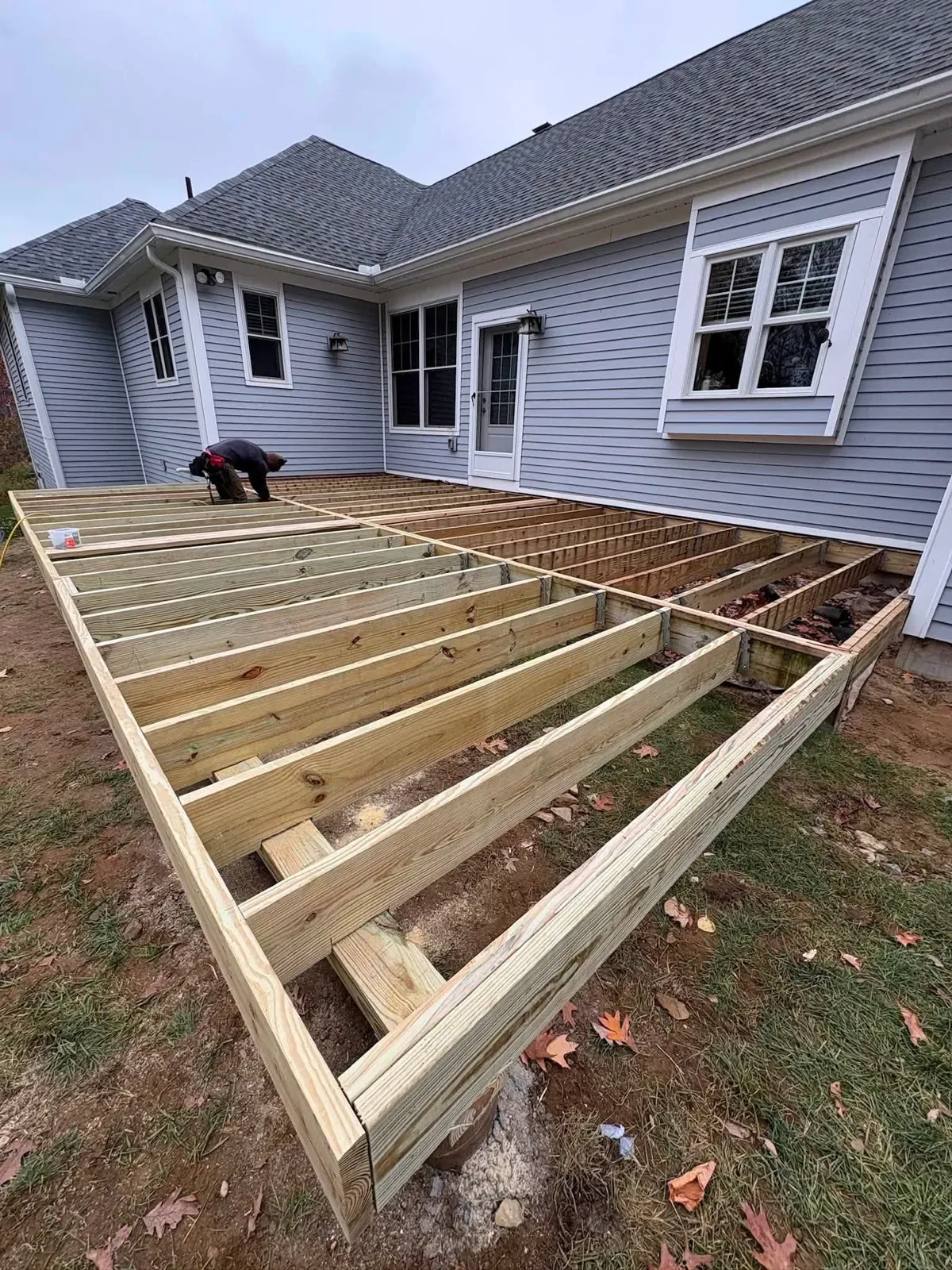
Hiring a Contractor in New Hampshire: What to Check Before You Sign
New Hampshire doesn't license general contractors, full stop. So "what's your state number?" to a carpenter or a remodeler tends to go nowhere. Some trades do get licensed (electricians and plumbers, say), and that runs through the Office of Professional Licensure and Certification. The rest you check on your own. Get a current insurance certificate. Get the scope of work on paper. Find out who pulls the permits. House older than 1978? Then you also want proof the firm's certified for lead-safe work, on paper.
What the state actually licenses
Licenses for electricians, plumbers, gas fitters and a few other trades come from the NH Office of Professional Licensure and Certification (OPLC). No carpenters on it, though. No general contractors either, or painters, drywall finishers or the people who put down floors. There is no state number to look up for them, and a contractor who claims one for general work is either confused or hoping you won't check.
You may run across a website saying New Hampshire requires "home improvement contractor" registration under RSA 332-A. It does not. That statute is titled "Licensing Standards Established" and deals with how licensing questions are handled, not with a registry of contractors. If someone offers it to you as a credential, ask exactly what they registered, with which office, and whether you can see the paper.
So the license question splits in two. For electrical, plumbing or gas work, the person doing that part of the job should hold the OPLC license for the trade, and it is fair to ask for the number and look it up. For the carpentry, flooring, drywall, paint and roofing, you judge the contractor on paperwork, plain answers and the work they have already done for other people.
Ask for the insurance certificate, not a yes
"Yes, I'm covered" costs nothing to say. A certificate of insurance is a one-page document the contractor's insurance agent can send you, often the same day you ask. It lists the carrier, the policy type, the limits and the dates. Check that the dates cover your whole project, not just the week you signed, and that the business name matches the name on your contract.
If the contractor has employees or brings in subcontractors, ask whether workers' compensation is part of the picture too. A fall from a ladder or a saw injury on your property is exactly the kind of thing you want someone else's policy to handle. You can also look up a business name with the NH Secretary of State to see that the company on the contract is a real, registered entity.
None of this is personal, and a decent contractor will not take it that way. One who has the paper will send it without fuss, usually before you finish asking. One who stalls, changes the subject or promises to "get it to you later" is telling you something about how the rest of the job will go.
Get the scope in writing
Once it's on paper, neither side can quietly remember it differently. Say what's being done and in which rooms. Name the materials. Then spell out what isn't included, because that's the part people forget. "Replace floor" is thin. "Remove carpet in two bedrooms, check and screw down the subfloor, install vinyl plank, new baseboard and shoe" is a scope. The more specific it is, the easier it is to compare two quotes fairly.
Older New Hampshire houses hide things. Maybe it's rot under the bathroom floor. Maybe a joist is cracked, or a header's too small, or there's old wiring sitting behind the plaster. So ask the contractor: when the walls or floors come open and something turns up, then what? A good answer names a process: they stop, show you what they found, and price the extra work with you before doing it, in writing if it is anything more than small.
Payment timing belongs in the same document. Know what is due up front, what is due at milestones, and what is due at the end, and tie those milestones to work you can see. Put the expected start date and a rough finish window in writing too, along with how you will be told if either one moves.
Permits: find out who pulls them
In Manchester, the city's Building Division handles plan review and permits for building, electrical, heating, plumbing and demolition work. Surrounding towns such as Bedford, Londonderry, Hudson and Nashua run their own building departments, with their own forms and fees. Either way, ask the contractor directly whether your job needs a permit and whose name goes on it.
If a contractor suggests you pull the permit yourself as the homeowner, understand what that means before you agree. Your name on the permit usually makes you the party responsible for the work passing inspection. That may be fine for a small job you understand well. It is a different story for structural changes, where you would be answering for somebody else's framing.
When you are not sure, call the building department before work starts. It is a short call, and their answer is worth more than any contractor's guess. Jot down the name of whoever picked up, and what they told you.
Pre-1978 houses: ask about lead-safe certification
Around Manchester, a lot of the houses are old. Devin Ouellette, who runs Crimson Maple Construction, describes the homes in the area as "mostly town-houses older 1800-1900s homes." Any house built before 1978 may have lead paint somewhere under the newer coats, on trim, windows, doors or plaster walls, even if every visible surface looks freshly painted.
Under the EPA Renovation, Repair and Painting rule, anyone paid to do work that disturbs painted surfaces in a pre-1978 home must be certified, and their workers trained. Ask any contractor for the firm certificate before sanding, cutting or demolition starts, and ask how they will contain and clean up the dust. Our guide on lead paint in older New Hampshire homes goes into more detail on what that looks like.
If you are planning framing, flooring or roofing work and want a number to compare against other quotes, call (603) 722-3344. Message us a photo — we’ll get you a number. This site does not yet state the company's insurance or lead-safe certification, so ask us for both, as you would anyone.
Questions people actually ask
- Does New Hampshire require a general contractor license?
No. Carpenters, remodelers, general contractors: none of them need a statewide license here. What the Office of Professional Licensure and Certification does license is certain trades, electricians and plumbers and gas fitters among them. For general work, check insurance paper, a written scope and permit responsibility instead, and ask for the trade license number whenever electrical, plumbing or gas work is part of the job.
- Is there a home improvement contractor registration in NH?
Not under RSA 332-A, despite what some websites claim. That statute is titled "Licensing Standards Established" and deals with how licensing questions are handled, not with registering contractors. A contractor waving it around as a credential? Ask what exactly got registered, and where. For local rules, you're better off calling your own town's building department.
- What should a written contractor estimate include?
Start with the rooms and surfaces, and the materials by type. It should also say what's left out. Then the harder bits: what happens with hidden problems once a wall or floor is open, whose name goes on any permit, and when you pay. In an older house, the hidden-problems line matters most. You want the contractor to stop and price extras with you before doing them.
- How do I check a contractor's insurance?
Ask for a certificate of insurance sent from the contractor's insurance agent. Check that the business name matches your contract, the policy dates cover your project, and the coverage type fits the work. If the contractor has employees or subs on site, ask about workers' compensation too. A contractor with current coverage can usually send the certificate quickly.
Before hiring anyone for this kind of work, it is worth reading what New Hampshire does and does not license and how a written quote should read. About Crimson Maple Construction covers who would be doing the work.
The work this guide is about
- FramingFraming in Manchester, NH: new walls, wider openings, basement rooms and new builds, and the NH building code behind them. Foundations and concrete by others.
- FlooringFlooring installation in Manchester, NH: luxury vinyl plank, laminate and engineered floors, subfloor repair and stair treads in older homes.
- RoofingRoofing in Manchester, NH: shingle repair or replacement, tear-off vs overlay, ice barrier at the eaves, flashing and ventilation, and what to send for a quote.
The other guides
- Manchester NH Building Permits: What Homeowners Should KnowManchester's Building Division, decks, electrical, who pulls the permit. And the one phone call that settles it.
- Lead Paint in Older New Hampshire Homes: Renovating SafelyBuilt before 1978? Then sanding, scraping and old windows come with federal rules. Here's what to ask first.
- Ice Dams and Roof Snow in New Hampshire: Causes and FixesSame roof, same icicles, every February. Why it keeps happening, what to do with the snow today, and the actual fix.
- LVP, Tile or Hardwood: Choosing Floors for a New Hampshire HomeBasement, bathroom, mudroom. Slush and salt on the way in. Which floor survives where, and why the subfloor matters.
- Drywall Repair or Replace: How to Decide in an Older HomePatch it or re-sheet it? Plus what's different when the wall turns out to be 1900s plaster and lath.
Manchester, NH
Tell us what the house needs
Call and describe the job. If it is on the service list, ask how it would go. Foundation work and concrete pads are not on it.