
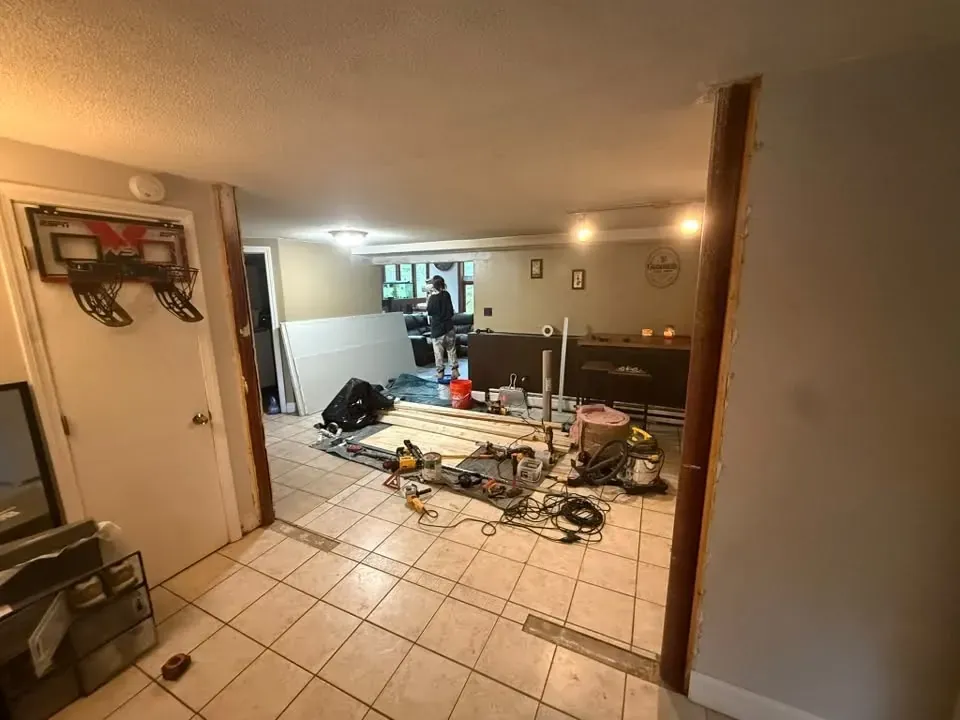
Lead Paint in Older New Hampshire Homes: Renovating Safely
If your New Hampshire house was built before 1978, assume lead paint may be somewhere in it until a test says otherwise. The federal EPA Renovation, Repair and Painting rule says anyone paid to disturb painted surfaces in those homes must be certified, and their workers trained in lead-safe methods. That covers a lot of ordinary jobs: scraping and painting trim, cutting into plaster, pulling old windows. The single most useful thing you can do is ask the contractor for their firm certificate before work starts.
Why older houses around Manchester matter here
Lead was a common ingredient in house paint for decades before it was banned for residential use in 1978. Southern New Hampshire has a lot of housing from well before that, and Manchester in particular has whole neighborhoods of older multi-family and mill-era homes. Devin Ouellette of Crimson Maple Construction describes the homes he sees as "mostly town-houses older 1800-1900s homes."
Lead paint that is intact and sealed under newer coats is not an emergency. It's when somebody disturbs it. Sanding does it. So does scraping, or cutting, or knocking a wall down; the old paint breaks up into fine dust and chips. The dust lands on floors and window sills. It gets on the couch. It gets on the toys. Plain rubbing does it too, so an old window that scrapes in its track every time you open it is a usual suspect.
The people most at risk are young children and pregnant women. Lead dust is next to invisible. A toddler crawls through it, then the hand goes in the mouth. Easy as that. So the rules care less about what's on your walls and more about how the job gets done, and how the room gets cleaned after.
What the EPA RRP rule requires
In EPA's words, the RRP Rule "requires that anyone paid to perform work that disturbs painted surfaces in homes, childcare facilities and preschools built before 1978 be certified and their employees be trained." The certification belongs to the firm doing the work. Individual workers on the crew are trained in lead-safe practices, and a certified renovator is responsible for how the job is set up and cleaned.
Before work starts in a pre-1978 home, contractors are expected to hand you EPA's Renovate Right pamphlet. It explains the hazard in plain language, covers who is most at risk and what safe work looks like, and is worth ten minutes of your time even if nobody gives it to you. You can read it free on EPA's site.
Lead-safe work looks different from ordinary work. There'll be plastic sheeting, taped and sealed around the work area. Warning signs go on the door. Dry sanding, power planing and open-flame paint removal are limited. At the end, the crew cleans up with HEPA vacuums and wet wipes, carefully. So if a crew walks into your old house and starts dry-sanding the trim with no plastic down? Have a word.
The New Hampshire rental and day-care rule
New Hampshire adds its own layer. Manchester's Building Division page cites NH RSA 130-A:5-d: since July 1, 2024, newly constructed rental units and newly licensed day cares in buildings erected before 1978 need lead-safety certification before anyone lives or is cared for there.
If you are adding a unit to an older multi-family, or converting part of an old building for a day care, raise this with the city at the start of the project, not at the end. A certificate of occupancy held up by a missing lead certification delays everything behind it, including rent and move-in dates, and it is much easier to plan for than to fix after the walls are closed.
HUD also publishes lead-safe housing guidance, which is useful background for landlords and property owners in older buildings. It covers testing, safe work practices and what to do when a child's blood test comes back high, and it sits well alongside the EPA material. For an owner of an older two-family or triple-decker who rents out units, it is a sensible place to start before planning any work between tenants.
Jobs that usually disturb paint
Painting prep is the obvious one. You scrape the loose paint off the trim, the doors, the clapboards. Then you sand it smooth. That's the job the rule had in mind. Fresh paint on top is fine. The scraping and sanding before it is where the dust comes from, and on an old house that can mean every window casing, door and baseboard in the room.
Drywall repair counts too when the wall around it is old plaster with old paint. Cutting out a damaged section, opening a wall for new framing, or tearing out plaster and lath all send painted material into the air. Window replacement is another big one, since old sashes, sills and jambs have often been painted many times and the removal breaks those layers apart.
Smaller jobs add up. Planing a sticking door, cutting trim for a new casing, pulling old baseboard, or chiseling out an old hinge pocket can all disturb old paint. None of these are reasons to leave an old house alone. They are reasons to ask how the dust gets handled before the first cut.
What to ask before the work starts
First, the EPA firm certificate. Look at the name on it. Is it the company you're actually hiring? Then find out who on the crew took the renovator training, and whether they'll be there on the day. How does the work area get closed off from the rest of the house? Where does the waste go? Who checks the cleanup when it's done, and how?
Paint never tested? Ask if it's worth testing first. The result tells you, surface by surface, whether lead-safe steps are needed at all, which can reshape the plan and the bill. If you have young children at home, it is also worth talking to your doctor about whether they should be tested.
Crimson Maple Construction does painting, drywall repair and window work around Manchester. This site does not yet state the company's EPA lead-safe certification, so ask about it directly. Call (603) 722-3344, or message us a photo — we’ll get you a number.
Questions people actually ask
- Does the EPA lead rule apply to my house?
If the house was built before 1978 and someone is being paid to do work that disturbs painted surfaces, the EPA Renovation, Repair and Painting rule applies. The contractor's firm must be certified and the workers trained in lead-safe practices. Homes are covered. So are childcare facilities and preschools. Not sure how old your house is? The town's assessing records normally show the year it was built.
- What is the Renovate Right pamphlet?
It's a short EPA booklet, in plain language, about lead hazards when you renovate. Families are the audience, plus child care providers and schools. In a pre-1978 home, the contractor's supposed to hand you one before any work that disturbs paint begins. It explains where lead hides, who is most at risk and what safe work practices look like. It is free to read on EPA's website.
- What is NH RSA 130-A:5-d?
It is the New Hampshire lead law cited on Manchester's Building Division page. The rule since July 1, 2024: newly constructed rental units, and newly licensed day cares, in buildings erected before 1978 need lead-safety certification before residential or day care use. Adding a rental unit to an old building, or opening a day care in one? Check with the city first, before anyone picks up a tool.
- Can I just paint over old lead paint?
If the lead paint is intact and you don't sand or scrape, a fresh coat barely disturbs it. Prep is the risky part: scraping off loose flakes, sanding, heat-stripping, cutting into the surface. Old paint that's peeling or cracking or gone chalky? Then the prep is where your lead dust gets made. So that's the moment lead-safe methods count most. If you're paying someone, it's also when their certificate counts.
Before hiring anyone for this kind of work, it is worth reading what New Hampshire does and does not license and how a written quote should read. About Crimson Maple Construction covers who would be doing the work.
Where to check this yourself
The work this guide is about
- PaintingInterior and exterior painting in Manchester, NH: prep, patching, priming and finish coats for older homes, with lead-safe rules for pre-1978 houses.
- Drywall repairDrywall repair and installation in Manchester, NH: holes, cracks, water stains, old plaster walls and new board, taped and ready for paint.
- WindowsWindow replacement in Manchester, NH: insert vs full-frame, old sash and lead paint in pre-1978 homes, energy ratings, rebates and what to send for a quote.
The other guides
- Hiring a Contractor in New Hampshire: What to Check Before You SignNH doesn't license general contractors. So "are you licensed?" gets you nowhere. Ask these four things instead.
- Manchester NH Building Permits: What Homeowners Should KnowManchester's Building Division, decks, electrical, who pulls the permit. And the one phone call that settles it.
- Ice Dams and Roof Snow in New Hampshire: Causes and FixesSame roof, same icicles, every February. Why it keeps happening, what to do with the snow today, and the actual fix.
- LVP, Tile or Hardwood: Choosing Floors for a New Hampshire HomeBasement, bathroom, mudroom. Slush and salt on the way in. Which floor survives where, and why the subfloor matters.
- Drywall Repair or Replace: How to Decide in an Older HomePatch it or re-sheet it? Plus what's different when the wall turns out to be 1900s plaster and lath.
Manchester, NH
Tell us what the house needs
Call and describe the job. If it is on the service list, ask how it would go. Foundation work and concrete pads are not on it.